I caused a history lesson today because I'm an american.
Class started today, and I now get to enjoy sitting for five hours a day learning about intricate german language rules for the next two months. I know how exciting that must sound to you, because just writing that sentence was abhorrent enough to me that I wonder why I *chose* to do this. German is good, german is great, german is wonderful. That's better.
There are 14 students in my class, and I'm the single student from the americas, and the single student whose native language is english. I know, I was surprised too. Seven of us are male and seven of us are confusing, a perfect gender mix. Two come from Belarus, one from Russia, two from Italy, one from Romania, one from Hungary, one from Japan, two from Saudi Arabia, a couple of others undoubtedly come from great countries, bless their hearts ----- and I come from America.
Germans like to be in the middle of everything. Maybe the center of everything. I'm german and american AND a college student, and that mixture is potent enough that I feel like I ought to be the center of everyone's universe. (I kid?) In fact, even the very first germans, tribes like the Frankonians and Burgundians and Visigoths and Ostrogoths and Othergoths, decided when they first came down from the north that they wanted to be the center of Europe.
That's all very well and good, but sometimes that means little bits of other cultures slip into german. Now, I'm all for the spreading of german culture (a better word would be dissemination), but I get antsy and fidgity and defensive when people start encroaching on my fatherland's turf. It's the worst with the french.
Back in the 18th century the french were the cool kids on the block* and everyone wanted to be just like them. And by everyone, I mean the germans - who at that point had spent too much time philosophizing on what life actually means and how to be and raise good people and the like to stay in touch with Cosmo's latest trends. Therefore, the germans aristocrats who were important and monied and kept their 18th-century Rolls at their 18th-century summer home in Monaco started copying the cool french sissies in the way they dressed and spoke (Parlez-vous deutsçh?). Dark times, until the Brothers Grimm collected some fairy tales and made a dictionary and snapped zee germans out of it.
Here's where I come in. America's now the big kid with McDonald's and Nike and Bill Gates and t-shirts that say I <3 New York -- all the important things in life -- and it's crept into german. The german word for "downloaded" should be "heruntergeladen," but is sometimes "downgeloaded." I've heard girls say "gebabysitted" for goodness sake - what kind of nonsense is that?!
My teacher's name is Lothar, and is probably a late-50s man who comes across as extremely intelligent and even better spoken. He's good. Probably the best language teacher I've ever seen. And that's just in a day. He paints pictures with words, then expresses emotions with those pictures, and suddenly we all know exactly what a word MEANS. He's good.
Anyway, he asked what it means "jemand auf den neusten Stand bringen" - bringing someone up to date. When I said "jemand aktualisieren," he said 'I had a feeling the american would say that!' Because the word "aktuelisieren" is kind of like the english word "actual," it didn't matter that I gave a correct and concise definition and that I was the first to know the answer. You see, I'm an american. Now if you'll excuse me, I have a Big Mac to attend to before Family Guy comes on.
*And back east, the russians were probably the cool kids on the bloc. Aren't I clever?
Tuesday, August 31, 2010

Monday, August 30, 2010
My room is a MOMA exhibit.
Well, I'm in Munich. It's raining, the institute classes start tomorrow, and my landlord is slightly crazy. I'm going to love it here. :)
So I cam down from Erlangen to Munich (or, as the germans say, München) this morning with my great aunt and uncle, and we had to spend the whole 120-mile drive in the rain. To give you an idea of just how bad the rain was, we had to drive 75mph most of the way and even had a 60mph rain-induced speed limit at one point. Such things should not be.
After arriving in München I went to the Goethe Institute to take my third and fourth incoming tests respectively. It turns out that the results from my previous test were confusing, because I did really well for the beginner section, pretty badly in the intermediate section, then nailed the expert session. Go figure - I chalk it up to boredom. Anyway, some bureaucratic European Union committee came up with this thing called the Common European Frame of Reference for Languages, or CEFoRfLqsTdf, for short. They split of language abilities into six categories, from A1 to C2 - the former meaning you know how to introduce yourself and gargle mouthwash in the foreign language, and the latter meaning you can write cohesive and beautiful sonnets about the gargling of mouthwash in the foreign language. The first test I took in the states got me a B2+, meaning that I wasn't quite smart enough to be a C1, and today's test for speaking placed me at C1+, which means I must stick to german limericks for now. In a way, it was reassuring doing decently, because I work hard and it was some sort of validation that that's paying off.
My landlord is a modern art painter, and in coming days you shall see photos of my room. Though the walls are white, my bed is red, my entire cupboard has been painted a la Moderné, and the average number of pieces of art on each of my four walls is 4.25. It's awesome. He also strikes me as not entirely sane in a very pleasant and friendly way and I think I'll get along fine here.
I bought a week ticket to use all the transit stuff here in town today because it's not September yet, and I wandered over to the church building, chilled with the elderly couple there, then enjoyed a nice family home evening for people who were neither family nor home. It was very nice.
Non-sequitur awesome quote:
"The journey to truly superior performance is neither for the faint of heart nor for the impatient. The development of genuine expertise requires struggle, sacrifice, and honest, often painful self-assessment. There are no shortcuts."
(K. Anders Ericsson in The Making of an Expert)
Tomorrow everything really begins. Should be interesting, I suppose. I'm in a city where I genuinely don't know anyone, aside from a few acquaintances from FHE tonight. It's strange, because I think this is the first time that's happened. I think I'll do just fine -- but write me an email, just in case. :)
So I cam down from Erlangen to Munich (or, as the germans say, München) this morning with my great aunt and uncle, and we had to spend the whole 120-mile drive in the rain. To give you an idea of just how bad the rain was, we had to drive 75mph most of the way and even had a 60mph rain-induced speed limit at one point. Such things should not be.
After arriving in München I went to the Goethe Institute to take my third and fourth incoming tests respectively. It turns out that the results from my previous test were confusing, because I did really well for the beginner section, pretty badly in the intermediate section, then nailed the expert session. Go figure - I chalk it up to boredom. Anyway, some bureaucratic European Union committee came up with this thing called the Common European Frame of Reference for Languages, or CEFoRfLqsTdf, for short. They split of language abilities into six categories, from A1 to C2 - the former meaning you know how to introduce yourself and gargle mouthwash in the foreign language, and the latter meaning you can write cohesive and beautiful sonnets about the gargling of mouthwash in the foreign language. The first test I took in the states got me a B2+, meaning that I wasn't quite smart enough to be a C1, and today's test for speaking placed me at C1+, which means I must stick to german limericks for now. In a way, it was reassuring doing decently, because I work hard and it was some sort of validation that that's paying off.
My landlord is a modern art painter, and in coming days you shall see photos of my room. Though the walls are white, my bed is red, my entire cupboard has been painted a la Moderné, and the average number of pieces of art on each of my four walls is 4.25. It's awesome. He also strikes me as not entirely sane in a very pleasant and friendly way and I think I'll get along fine here.
I bought a week ticket to use all the transit stuff here in town today because it's not September yet, and I wandered over to the church building, chilled with the elderly couple there, then enjoyed a nice family home evening for people who were neither family nor home. It was very nice.
Non-sequitur awesome quote:
"The journey to truly superior performance is neither for the faint of heart nor for the impatient. The development of genuine expertise requires struggle, sacrifice, and honest, often painful self-assessment. There are no shortcuts."
(K. Anders Ericsson in The Making of an Expert)
Tomorrow everything really begins. Should be interesting, I suppose. I'm in a city where I genuinely don't know anyone, aside from a few acquaintances from FHE tonight. It's strange, because I think this is the first time that's happened. I think I'll do just fine -- but write me an email, just in case. :)
Saturday, August 28, 2010
Back from Berlin
The problem at the moment is that I can't upload pictures yet. Give me three days.
Succinctly, Berlin is awesome.
Over the course of five days I traveled from Erlangen near Nürnberg to Eisenach. Eisenach is the little medieval town next to the Wartburg Castle where Martin Luther translated the New Testament while he was hiding out from a very angry Catholic church. After Eisenach we drove to Bad Harzburg, which, as I've said, will someday be very famous because the ancestors of Ryan Nelson came from there. From there it was a three hour drive to Berlin.
Do you know what it's like to have a topic in your mind but you're unsure of what to do with it so you'd rather leave it alone? That's how being in Berlin feels to me, because most of the ideas I have presently for writing about it would turn this into a travelogue -- which I emphatically don't want to do.
First, a few facts: there are around 3.5 million people living in Berlin proper, and the metro area is home to a total of a little over 5 million. That's nearly twice as many people as Utah, and roughly the same as the total population of Colorado. Interestingly, there are no skyscrapers taller than about 20 stories in Berlin. Also, Berlin is the capitol of Germany. Besides that, the government buildings look awesome (just stating the facts).
It's a good sign when the first impressions you have after a day wandering a city is that's it's alive and that you could live there. There's simply so much going on.
We first wandered from the enormous train station -- second largest in the world, I believe -- to the Altstadt, the old city where the government functions. Sadly Angela was a bit too busy to see me, but then, as the president of a country she's entitled to being busy. After meandering around the old buildings (I'm bothered I can't do this justice) we came to The Memorial to the Murdered Jews of Europe.
The Holocaust is one of the most terrible events known to humanity - caused by hatred and xenophobia it wiped out nearly two thirds of the Jews of Europe through state-sponsored, systematic and efficient murder. Adolf Hitler was unequivocally evil and the program of genocide the national socialist party of Germany created is beyond abhorrent. In a book entitled Die Schuldfrage (The Question of Fault) which was published a year after the end of the second world war, the historian and german philosopher Karl Jaspers said that the atrocities wrought by Hitler's regime were a sorrow that germans would have to carry as guilt and shame for generations because those actions of hatred were committed against Germany as well as against the Jews.
In Germany, nearly everything can be dicussed freely, from sex to politics to the idiotic driver in front of you. Germans tend to be quite frank and direct, which I appreciate and understand. However, the second world war and Holocaust can only be discussed carefully in good company. The swastika has been outlawed in Germany (Strafgesetzbuch §86a) and it's a mark of the people's intolerance of the symbol that one doesn't even really see it used in graffiti. There is some sort of background consciousness there that I find both fascinating -- in how it's handled -- and tragic -- in how's it's left an indelible print on this people.
The Memorial to the Murdered Jews of Europe (German: Denkmal für die ermorderten Juden Europas) was completed in 2004 and opened in early 2005. It consists of around 2700 rectangular grey pillars that are a little less than 8 feet long and a little more than 3 feet wide - unnervingly close in size to coffins. They take up a city block in neat, even rows, and the pillars are different heights, reminiscent of waves or the ascension of a city from its suburbs to the tall skyscrapers in the middle - indeed, the middle pillars are sometimes up to 16 feet high.
There is no plaque stating what it means. There are no markings or words or names on the pillars. On a sunny day you see people lying atop the pillars or hopping from pillar to pillar as they get higher. When you walk down the rows you eventually get lost in a sea of grey much higher than your head. It feels uneasy, and it feels wrong. And somehow, somewhere in the middle, I couldn't help but weep.
Think of it, 6 million people and all their progeny and possibilities lost to hatred. The chilling word in all of it, to me, must be "systematic." And as I sat in the shade of these pillars I felt like they could represent a huge city of lost souls, an ocean of the dead. I don't know more what to say. When you're in Berlin, visit the memorial.
-----
To turn things around a bit, the rest of my day was glorious. After a tour on a river-boat, we sat at an outdoor café and watched an english firebreather work his magic. We wandered through old streets my aunt knew from living there, and ended up in this artistic shopping quarter where I was forced (against my will, mind you) to buy the coolest italian blazer, shirt and tie that I've ever seen.
Ernst & Young have offices in Berlin, as do Goldman Sachs and others. That gives me hope that there are enough american firms here that I could eventually live there for a while were the opportunity right. And the sun kipped below the horizon and we took the train back to the outskirts of town, I knew I had barely seen the city. The mayor of Berlin once called it the "poor and sexy" city, and, while I don't know if it's necessarily poor, the rest of his statement was right. Like I said, Berlin is awesome.
In a few days I'm driving down to Munich where I start my schooling at the Goethe Institut. I found out last night that I'll be staying with a relatively famous german modern art painter in the best part of Munich, and I hope that turns out as well as it sounds like it should.
I'll post pictures as soon as I can. Bis dann!
Succinctly, Berlin is awesome.
Over the course of five days I traveled from Erlangen near Nürnberg to Eisenach. Eisenach is the little medieval town next to the Wartburg Castle where Martin Luther translated the New Testament while he was hiding out from a very angry Catholic church. After Eisenach we drove to Bad Harzburg, which, as I've said, will someday be very famous because the ancestors of Ryan Nelson came from there. From there it was a three hour drive to Berlin.
Do you know what it's like to have a topic in your mind but you're unsure of what to do with it so you'd rather leave it alone? That's how being in Berlin feels to me, because most of the ideas I have presently for writing about it would turn this into a travelogue -- which I emphatically don't want to do.
First, a few facts: there are around 3.5 million people living in Berlin proper, and the metro area is home to a total of a little over 5 million. That's nearly twice as many people as Utah, and roughly the same as the total population of Colorado. Interestingly, there are no skyscrapers taller than about 20 stories in Berlin. Also, Berlin is the capitol of Germany. Besides that, the government buildings look awesome (just stating the facts).
It's a good sign when the first impressions you have after a day wandering a city is that's it's alive and that you could live there. There's simply so much going on.
We first wandered from the enormous train station -- second largest in the world, I believe -- to the Altstadt, the old city where the government functions. Sadly Angela was a bit too busy to see me, but then, as the president of a country she's entitled to being busy. After meandering around the old buildings (I'm bothered I can't do this justice) we came to The Memorial to the Murdered Jews of Europe.
The Holocaust is one of the most terrible events known to humanity - caused by hatred and xenophobia it wiped out nearly two thirds of the Jews of Europe through state-sponsored, systematic and efficient murder. Adolf Hitler was unequivocally evil and the program of genocide the national socialist party of Germany created is beyond abhorrent. In a book entitled Die Schuldfrage (The Question of Fault) which was published a year after the end of the second world war, the historian and german philosopher Karl Jaspers said that the atrocities wrought by Hitler's regime were a sorrow that germans would have to carry as guilt and shame for generations because those actions of hatred were committed against Germany as well as against the Jews.
In Germany, nearly everything can be dicussed freely, from sex to politics to the idiotic driver in front of you. Germans tend to be quite frank and direct, which I appreciate and understand. However, the second world war and Holocaust can only be discussed carefully in good company. The swastika has been outlawed in Germany (Strafgesetzbuch §86a) and it's a mark of the people's intolerance of the symbol that one doesn't even really see it used in graffiti. There is some sort of background consciousness there that I find both fascinating -- in how it's handled -- and tragic -- in how's it's left an indelible print on this people.
The Memorial to the Murdered Jews of Europe (German: Denkmal für die ermorderten Juden Europas) was completed in 2004 and opened in early 2005. It consists of around 2700 rectangular grey pillars that are a little less than 8 feet long and a little more than 3 feet wide - unnervingly close in size to coffins. They take up a city block in neat, even rows, and the pillars are different heights, reminiscent of waves or the ascension of a city from its suburbs to the tall skyscrapers in the middle - indeed, the middle pillars are sometimes up to 16 feet high.
There is no plaque stating what it means. There are no markings or words or names on the pillars. On a sunny day you see people lying atop the pillars or hopping from pillar to pillar as they get higher. When you walk down the rows you eventually get lost in a sea of grey much higher than your head. It feels uneasy, and it feels wrong. And somehow, somewhere in the middle, I couldn't help but weep.
Think of it, 6 million people and all their progeny and possibilities lost to hatred. The chilling word in all of it, to me, must be "systematic." And as I sat in the shade of these pillars I felt like they could represent a huge city of lost souls, an ocean of the dead. I don't know more what to say. When you're in Berlin, visit the memorial.
-----
To turn things around a bit, the rest of my day was glorious. After a tour on a river-boat, we sat at an outdoor café and watched an english firebreather work his magic. We wandered through old streets my aunt knew from living there, and ended up in this artistic shopping quarter where I was forced (against my will, mind you) to buy the coolest italian blazer, shirt and tie that I've ever seen.
Ernst & Young have offices in Berlin, as do Goldman Sachs and others. That gives me hope that there are enough american firms here that I could eventually live there for a while were the opportunity right. And the sun kipped below the horizon and we took the train back to the outskirts of town, I knew I had barely seen the city. The mayor of Berlin once called it the "poor and sexy" city, and, while I don't know if it's necessarily poor, the rest of his statement was right. Like I said, Berlin is awesome.
In a few days I'm driving down to Munich where I start my schooling at the Goethe Institut. I found out last night that I'll be staying with a relatively famous german modern art painter in the best part of Munich, and I hope that turns out as well as it sounds like it should.
I'll post pictures as soon as I can. Bis dann!
Tuesday, August 24, 2010
Der Blick aus meinem Hotelfenster
There's a river right below my window. It's quiet, maybe 150 feet wide, and moving just fast enough that lights from the other side are twinkling in the eddies and ripples from the current. Directly across from me is a palace, and just upstream the tall clock tower of the Rathaus (city hall) proclaims the time is neither wrong nor right. A single river boat is putting upstream, red light facing me, and other boats are moored safely on the shore below. Adding to this already restful and somehow perfect night view is the full moon, rising to my right above it all.
Berlin is gorgeous.
One thing that's struck me about being here in Germany is how historied everything is. Yesterday I was on the Wartburt castle (pronounced vart-boorg), where Martin Luther translated the New Testament - and where Johann Wolfgang von Goethe loved to visit. Richard Wagner was there and wrote a portion of the opera just for the castle, and Franz Lizst composed several pieces in the upper room there. Some of the greatest minds in history, all during different centuries in one room.
Last night we stayed in a little town called Bad Harzburg. If ever in my life there's a place I would call my pilgrimage, Bad Harzburg is it. It's a little town nestled in the Harz Mountains of northern Germany, and its principal claim to fame is that my german ancestry lived there for hundreds of years. But then who lived a few kilometers away? Gotthold Ephraim Lessing, an amazing philosopher who saw truth as beauty and spent his life following it.
Lessing wrote:
"The true value of a man is not determined by his possession, supposed or real, of Truth, but rather by his sincere exertion to get to the Truth. It is not possession of the Truth, but rather the pursuit of Truth by which he extends his powers and in which his ever-growing perfectibility is to be found."
There you have it. The profoundest words to likely ever go on this blog, and I had absolutely nothing to do with them.
People ask me every once in a while why I love Germany so much. The obvious first guess from those who know me would likely be "the Autobahn." And they're not really wrong - automobiles of teutonic excellence whizzing along gloriously beautiful roads do leave me breathless and strangely stammery. The history of the place fascinates me, too; I love finding out about the great thinkers, the enlightened and enlightening men from Germany who have bettered the world. Of course, my family comes from Germany, and heritage plays a large role.
I can't put a finger on the exact answer myself, because the likely answer is a mixture of all three (as well as a heady dose of 95%-flavorful food). "Das alles ist Deutschland, das alles sind wir. Gibt's nirgendwo anders, nur hier, nur hier." (If you didn't catch the reference, don't worry about it.)
The palace across the water has its own story: one day, a man walked in claiming he was the lord of the place. He set up shop and lived there for a while, claiming he was the owner, then made off with all the money in the house. Lessing and Goethe were good, but that's brilliance. I'm glad to be in Germany.
Berlin is gorgeous.
One thing that's struck me about being here in Germany is how historied everything is. Yesterday I was on the Wartburt castle (pronounced vart-boorg), where Martin Luther translated the New Testament - and where Johann Wolfgang von Goethe loved to visit. Richard Wagner was there and wrote a portion of the opera just for the castle, and Franz Lizst composed several pieces in the upper room there. Some of the greatest minds in history, all during different centuries in one room.
Last night we stayed in a little town called Bad Harzburg. If ever in my life there's a place I would call my pilgrimage, Bad Harzburg is it. It's a little town nestled in the Harz Mountains of northern Germany, and its principal claim to fame is that my german ancestry lived there for hundreds of years. But then who lived a few kilometers away? Gotthold Ephraim Lessing, an amazing philosopher who saw truth as beauty and spent his life following it.
Lessing wrote:
"The true value of a man is not determined by his possession, supposed or real, of Truth, but rather by his sincere exertion to get to the Truth. It is not possession of the Truth, but rather the pursuit of Truth by which he extends his powers and in which his ever-growing perfectibility is to be found."
There you have it. The profoundest words to likely ever go on this blog, and I had absolutely nothing to do with them.
People ask me every once in a while why I love Germany so much. The obvious first guess from those who know me would likely be "the Autobahn." And they're not really wrong - automobiles of teutonic excellence whizzing along gloriously beautiful roads do leave me breathless and strangely stammery. The history of the place fascinates me, too; I love finding out about the great thinkers, the enlightened and enlightening men from Germany who have bettered the world. Of course, my family comes from Germany, and heritage plays a large role.
I can't put a finger on the exact answer myself, because the likely answer is a mixture of all three (as well as a heady dose of 95%-flavorful food). "Das alles ist Deutschland, das alles sind wir. Gibt's nirgendwo anders, nur hier, nur hier." (If you didn't catch the reference, don't worry about it.)
The palace across the water has its own story: one day, a man walked in claiming he was the lord of the place. He set up shop and lived there for a while, claiming he was the owner, then made off with all the money in the house. Lessing and Goethe were good, but that's brilliance. I'm glad to be in Germany.
Saturday, August 21, 2010
A Word on German Food.
"He who eats alone, chokes alone." - Arabic proverb
"I don't like broccoli. And I haven't since I was a little kid and my mother made me eat it. I am the President of the United States, and I'm not going to eat any more broccoli." - George W. Bush (though he probably said "ain't", per our last discussion)
"One can not think well, love well, sleep well, if one has not dined well." - Virginia Woolf
This is a post about a topic near to my heart - just a bit under and to the right. And it's a topic about which the germans are delightfully concerned. I said a word on german food, and I meant it:
Fat.
In the morning I eat bread with butter and cheese spread copiously atop, with a little salami or wurst on the side or to accompany the (also-butter-smeared) second slice of bread. I drink whole milk, and for breakfast-dessert I eat some sweet yoghurt covered in fruit. There is some fruit and veg that goes with the meal, but that's not the important thing.
Today for lunch I ate a thing called Schweineschäufele, which is a pig's shoulder. And the more I think about it, the more certain I am that I ate the entire shoulder of a very large pig. I have no training in gastronomie or the correct chemistry of food (though I do have a book called "What Einstein Told his Cook), but they say that fat holds or transports the flavor of foods. If that is the case, and there is some sort of linear relation between the fat content and flavor content, I ate the most flavorful food in the world today. I'm not kidding when I say some bites must have been at least 95% flavor, if you know what I mean.
And I absolutely loved it. So good.
The most keen among you must be surely saying: "But wait! Wasn't my dearly beloved, sorely missed, wonderful friend and secret lover (for women) Ryan already in Germany!? Shouldn't he already know what german food tastes like!? Oh, I'm so confused! And because I think of him so often anyway, this will only add to the sleepless nights and worry!" Not to worry, dear reader. The problem is location.
I wouldn't go so far as to say that in northern Germany one eats only cabbage, rice and orange juice, but it's much nearer the truth there as it is here in the south. One still eats meat there, but not in the portions I've experienced in the last two days alone. It turns out that there are even Schweineschäufele clubs here in Bavaria (the state I'm in), which should say something about the food. Not to worry, the clubs are relatively small because others eat smaller portions. Or because the clubs aren't necessarily the wisest life-choice for longevity. I haven't decided.
This evening I ate a very small portion of olive salad (with fresh cheese, like cream cheese, and sundried tomatoes and roasted red peppers) and then fruit salad and a single slice of whole-wheat bread, so I should live to see another german morning. Tomorrow we're beginning our journey to Berlin, which will take us through Bad Harzburg -- my pilgrimage site -- for a night. I now have internet on my phone again so it'll be much easier for me to post updates. Until then, dear reader - bon appétit, und lasst es euch schmecken!
"I don't like broccoli. And I haven't since I was a little kid and my mother made me eat it. I am the President of the United States, and I'm not going to eat any more broccoli." - George W. Bush (though he probably said "ain't", per our last discussion)
"One can not think well, love well, sleep well, if one has not dined well." - Virginia Woolf
This is a post about a topic near to my heart - just a bit under and to the right. And it's a topic about which the germans are delightfully concerned. I said a word on german food, and I meant it:
Fat.
In the morning I eat bread with butter and cheese spread copiously atop, with a little salami or wurst on the side or to accompany the (also-butter-smeared) second slice of bread. I drink whole milk, and for breakfast-dessert I eat some sweet yoghurt covered in fruit. There is some fruit and veg that goes with the meal, but that's not the important thing.
Today for lunch I ate a thing called Schweineschäufele, which is a pig's shoulder. And the more I think about it, the more certain I am that I ate the entire shoulder of a very large pig. I have no training in gastronomie or the correct chemistry of food (though I do have a book called "What Einstein Told his Cook), but they say that fat holds or transports the flavor of foods. If that is the case, and there is some sort of linear relation between the fat content and flavor content, I ate the most flavorful food in the world today. I'm not kidding when I say some bites must have been at least 95% flavor, if you know what I mean.
And I absolutely loved it. So good.
The most keen among you must be surely saying: "But wait! Wasn't my dearly beloved, sorely missed, wonderful friend and secret lover (for women) Ryan already in Germany!? Shouldn't he already know what german food tastes like!? Oh, I'm so confused! And because I think of him so often anyway, this will only add to the sleepless nights and worry!" Not to worry, dear reader. The problem is location.
I wouldn't go so far as to say that in northern Germany one eats only cabbage, rice and orange juice, but it's much nearer the truth there as it is here in the south. One still eats meat there, but not in the portions I've experienced in the last two days alone. It turns out that there are even Schweineschäufele clubs here in Bavaria (the state I'm in), which should say something about the food. Not to worry, the clubs are relatively small because others eat smaller portions. Or because the clubs aren't necessarily the wisest life-choice for longevity. I haven't decided.
This evening I ate a very small portion of olive salad (with fresh cheese, like cream cheese, and sundried tomatoes and roasted red peppers) and then fruit salad and a single slice of whole-wheat bread, so I should live to see another german morning. Tomorrow we're beginning our journey to Berlin, which will take us through Bad Harzburg -- my pilgrimage site -- for a night. I now have internet on my phone again so it'll be much easier for me to post updates. Until then, dear reader - bon appétit, und lasst es euch schmecken!
Friday, August 20, 2010
A Stranger in a Strange Land, or Deutsch and Narcolepsy
Tevye: As Abraham said, "I am a stranger in a strange land... "
Mendel: Moses said that.
Tevye: Ah. Well, as King David said, "I am slow of speech, and slow of tongue."
Mendel: That was also Moses.
Tevye: For a man who was slow of tongue, he talked a lot.
Having been in Germany for a few days, I'm finally starting to sleep normally. My travel took me on Sunday from Salt Lake City to Atlanta, and then on to Munich - and unfortunately, I've grown a little to much to be able to sleep any more in coach seats on airlines. (Note to self: fly first class in the future.) That means that the first night I was here I slept more than 12 hours, and I've averaged 12 hours a night every subsequent evening.
I think part of it comes down to how much there is to see and experience here which is unfamiliar. From silly things like noticing different brands of jeans to different foods and even different facial expressions people wear as they're walking down the street, there are a lot of small social differences between Germany and the US. More importantly, there's that whole language problem.
You see, in America there's english and there's the south, but even silly people who chose to grow up in places like Texas and Alabama use words that the rest of us understand. In Germany, we're not so lucky. I served my mission in Hamburg, and for the most part german in the northern part of the country is very clean and easy to understand. Here in the south I'm running into dialects of german called "Schwabisch" and "Frankisch" that don't even resemble what I know as german when the speakers are too intensely involved in their dialect speaking. Yesterday I went to Legoland with my aunt, uncle and cousins (more on that later, be very excited for pictures) and there were a few times I turned to my aunt and asked if people around me were even speaking german!
There was a study conducted by Harvard* which determined that increased sleep needs are almost directly proportional to the amount of new learning someone is undertaking. And given that I'm now speaking the highest percentage of german I ever have in my life (at least 98% a day is now german) and I'm seeing and experiencing all these new things, it's no wonder that I've been awfully tired. It makes me feel like Moses. But now the sun is shining and we're about to go 'make circuit trainings' at the local Fitness-Centre, and I think things are going to be just fine.
Besides which, Germany freaking rocks.
*I made that up.
Mendel: Moses said that.
Tevye: Ah. Well, as King David said, "I am slow of speech, and slow of tongue."
Mendel: That was also Moses.
Tevye: For a man who was slow of tongue, he talked a lot.
Having been in Germany for a few days, I'm finally starting to sleep normally. My travel took me on Sunday from Salt Lake City to Atlanta, and then on to Munich - and unfortunately, I've grown a little to much to be able to sleep any more in coach seats on airlines. (Note to self: fly first class in the future.) That means that the first night I was here I slept more than 12 hours, and I've averaged 12 hours a night every subsequent evening.
I think part of it comes down to how much there is to see and experience here which is unfamiliar. From silly things like noticing different brands of jeans to different foods and even different facial expressions people wear as they're walking down the street, there are a lot of small social differences between Germany and the US. More importantly, there's that whole language problem.
You see, in America there's english and there's the south, but even silly people who chose to grow up in places like Texas and Alabama use words that the rest of us understand. In Germany, we're not so lucky. I served my mission in Hamburg, and for the most part german in the northern part of the country is very clean and easy to understand. Here in the south I'm running into dialects of german called "Schwabisch" and "Frankisch" that don't even resemble what I know as german when the speakers are too intensely involved in their dialect speaking. Yesterday I went to Legoland with my aunt, uncle and cousins (more on that later, be very excited for pictures) and there were a few times I turned to my aunt and asked if people around me were even speaking german!
There was a study conducted by Harvard* which determined that increased sleep needs are almost directly proportional to the amount of new learning someone is undertaking. And given that I'm now speaking the highest percentage of german I ever have in my life (at least 98% a day is now german) and I'm seeing and experiencing all these new things, it's no wonder that I've been awfully tired. It makes me feel like Moses. But now the sun is shining and we're about to go 'make circuit trainings' at the local Fitness-Centre, and I think things are going to be just fine.
Besides which, Germany freaking rocks.
*I made that up.
Tuesday, June 08, 2010
Burnt Rubber
I joined a biker gang yesterday.
We've decided we're going to meet on Sunday nights, and our agenda involves cruising the strip, intimidating other gangs and trying to fly under police radar. Last night was talking plans, talking initiation, talking possible tats that we could get to show our dedication and our street cred - but we still found time to roll Center St and show our solidarity and our intentions. Watch out, Provo! Burnt Rubber is here.
I bought my first road bike on my 15th birthday, in 2002. It was a silver-and-yellow Giant OCR3 which I outgrew much too quickly. It had Sora components and a compact geometry that was perfect for agility but left me feeling hesitant on the epic downhills I love. I rode that for two years, upgrading to my current bicycle on my 17th birthday - a white Cannondale R1000 which I've tweaked and modded far away from its original pretentions. Carbon fiber and titanium are draped over it in an array best described by my high-school motto: I have money, and I need to spend it.
I've ridden from Seattle to Portland and from my apartment around the block. I've climbed a 4500-foot mountain on nothing but a bottle of water, and on other days I've gone out and pounded miles which were fueled by three Double Quarter Pounders from McDonald's.
Last night's ride was relaxing and almost impossibly slow. I'm used to getting on my bike for specific purposes - for increasing my fitness, for bettering my awesome spandex-induced tan lines, for clearing my head after a long day. I'm used to riding 30 miles with impunity and 80 with ease - last night we road 5. Optimistically. And I loved it.
The reason it's been on my mind is because it was so mundane, and because it was impossibly fun. When do I take the time like that to do something that doesn't have a clear objective? I remember what Billy Collins said once at a BYU Devotional:
I've tried to live by that quote, but I'm starting to think that I haven't ever really understood it, and that I'm just beginning to have a better idea of what it means to me. I try to fill my days with meaningful activities so that when I hit my pillow I haven't wasted life, haven't wasted those 1440 minutes which were given me that day. But I don't think I'm very good at thinking about my days as I'm in them, instead looking ahead with laser focus at what I see in my future. It's easy to do, because I've a bright future and no reason to expect otherwise. But even if I'm working hard and looking to the future, I'm forgetting how to carpe a crucial component of my diems: the part where I sit back and enjoy the ride.
That's why last night's ride with my new gang was so useful for me. I need to tell myself to slow down, to stop and smell the roses, to sit up on my bike saddle and look around at where I am - because if I don't remind myself, I won't do it. Being worried about where you're going is great until you realize you're there and you missed the journey.
I don't want that. Do you? This one is from Kerouac:
Someday, when it's time to look back at my life, I don't want to see a series of precise actions that were totally logical and perfectly executed. I'd rather see course corrections as I change my mind and seek to live deliberately. Twists and turns and bends in the road of life that mean that I was trying to suck the marrow out of it, to find my best path and my best me. I want my life to be filled with friendships and activity and smiling and meaning and life.
We've decided that we're going to meet on Sunday nights, and our agenda involves cruising the strip, intimidating other gangs and trying to fly under police radar. My agenda involves sitting up and slowing down, grinning at other riders and enjoying being in the middle of the pack instead of always rushing to the front. My agenda involves having fun and nurturing relationships that matter, enjoying myself and living life for the joy of it. But I meant to be talking about cycling.
We've decided we're going to meet on Sunday nights, and our agenda involves cruising the strip, intimidating other gangs and trying to fly under police radar. Last night was talking plans, talking initiation, talking possible tats that we could get to show our dedication and our street cred - but we still found time to roll Center St and show our solidarity and our intentions. Watch out, Provo! Burnt Rubber is here.
I bought my first road bike on my 15th birthday, in 2002. It was a silver-and-yellow Giant OCR3 which I outgrew much too quickly. It had Sora components and a compact geometry that was perfect for agility but left me feeling hesitant on the epic downhills I love. I rode that for two years, upgrading to my current bicycle on my 17th birthday - a white Cannondale R1000 which I've tweaked and modded far away from its original pretentions. Carbon fiber and titanium are draped over it in an array best described by my high-school motto: I have money, and I need to spend it.
I've ridden from Seattle to Portland and from my apartment around the block. I've climbed a 4500-foot mountain on nothing but a bottle of water, and on other days I've gone out and pounded miles which were fueled by three Double Quarter Pounders from McDonald's.
Last night's ride was relaxing and almost impossibly slow. I'm used to getting on my bike for specific purposes - for increasing my fitness, for bettering my awesome spandex-induced tan lines, for clearing my head after a long day. I'm used to riding 30 miles with impunity and 80 with ease - last night we road 5. Optimistically. And I loved it.
The reason it's been on my mind is because it was so mundane, and because it was impossibly fun. When do I take the time like that to do something that doesn't have a clear objective? I remember what Billy Collins said once at a BYU Devotional:
"The oldest subject in poetry is carpe diem. The reason you're asked to carpe your diems is that you don't have many diems left. The more you see your days as numbered, the more grateful you'll be for those moments you have."
I've tried to live by that quote, but I'm starting to think that I haven't ever really understood it, and that I'm just beginning to have a better idea of what it means to me. I try to fill my days with meaningful activities so that when I hit my pillow I haven't wasted life, haven't wasted those 1440 minutes which were given me that day. But I don't think I'm very good at thinking about my days as I'm in them, instead looking ahead with laser focus at what I see in my future. It's easy to do, because I've a bright future and no reason to expect otherwise. But even if I'm working hard and looking to the future, I'm forgetting how to carpe a crucial component of my diems: the part where I sit back and enjoy the ride.
That's why last night's ride with my new gang was so useful for me. I need to tell myself to slow down, to stop and smell the roses, to sit up on my bike saddle and look around at where I am - because if I don't remind myself, I won't do it. Being worried about where you're going is great until you realize you're there and you missed the journey.
I don't want that. Do you? This one is from Kerouac:
"The aim of life is to live, and to live means to be aware, joyously, drunkenly, serenely, divinely aware."
Someday, when it's time to look back at my life, I don't want to see a series of precise actions that were totally logical and perfectly executed. I'd rather see course corrections as I change my mind and seek to live deliberately. Twists and turns and bends in the road of life that mean that I was trying to suck the marrow out of it, to find my best path and my best me. I want my life to be filled with friendships and activity and smiling and meaning and life.
We've decided that we're going to meet on Sunday nights, and our agenda involves cruising the strip, intimidating other gangs and trying to fly under police radar. My agenda involves sitting up and slowing down, grinning at other riders and enjoying being in the middle of the pack instead of always rushing to the front. My agenda involves having fun and nurturing relationships that matter, enjoying myself and living life for the joy of it. But I meant to be talking about cycling.
Tuesday, September 12, 2006
The tapestry of our lives
Hi, I'm back. As some of you have probably noticed, I suffer alternately from insomnia and narcolepsy. Lucky for you, tonight I am apparently afflicted with the former.
Lying in bed this evening, and having given up counting sheep some time before, I was thinking about friends and family and how various individuals have helped shape who I've become and who I am. From this thought, it occurred to me that we are all connected in various ways through the impact we have on each others' lives. This prompted my brilliant life-tapestry allegory/analogy/simile which I'm about to delve into which I'm currently quite happy with. I've never heard of such a thing before and certainly haven't thought of it, so if it's old stuff, please forgive and move on.
Anyway, in France, there's this huge ribbon called the Bayeux Tapestry made by some very bored and very long-winded individuals in about the eleventh century Anno Domini. Though it's less than two feet tall, the tapestry is more than 230 feet long and tells of the 1066 Battle of Hastings. The center panels in this massive comic strip deal with the story itself, and above and below various (probably boring) details are hashed out. 230 feet. That's a lot of jeans.
A tapestry, like any other cloth, is woven of very small threads that come together to make a complete whole. While it's painfully simple to draw analogies from this, I think there's some worth in reexamination every once in a while, and given that I currently have nothing better to do, I'll delve into where my thoughts were going earlier that prompted my rising and enduring the burning torture caused by this computer screen to my dark-adapted retinae.
A common phrase in this day and age is that we are what we eat. Modified slightly, we are who we associate with, esp. those with whom we have significant interactions. I'm sure you can think of odd phrases or sayings from friends that you use, frequently or not, in your own life. Going further, we share experiences and ideas with those we cherish - our friends and family. Just as there are people who are a part of my everyday life that obviously effect how I act and feel, there are friends who I may never see again that shall forever be completely inseparable from who I am because of their impact in my life. It's an odd thing that we should promote so much of ourselves in others, with little thought toward that end. As we continue growing towards our own ends and happiness there will always be these people and these threads that will shape who we are and how we become ourselves.
In a way, this idea somewhat diminishes our individuality, in that it is easy to see ourselves as products of our situations. But in another way, it strengthens the concept of self, because, though we ARE molded by our position in various realms of existence, we can choose our part, what people and events we will and will not accept, and become accordingly. At least in my mind, it's a rather nice thought.
So the moral of the story, I guess, is to be as good a person as you can. When I hear that I always think selfishly - that I should be my best for my own ends. But when you think off all the hundreds or thousands of other wanderers to whom you reach out in this small bit of time, it makes sense that you would only want to be the cause of good. Particularly because, as time progresses, those little bits of yourself that you have shared will be passed on innumerably and imperturbably to countless others that you touch only remotely. By small and simple things are great things brought to pass. Maybe it's true.
Lying in bed this evening, and having given up counting sheep some time before, I was thinking about friends and family and how various individuals have helped shape who I've become and who I am. From this thought, it occurred to me that we are all connected in various ways through the impact we have on each others' lives. This prompted my brilliant life-tapestry allegory/analogy/simile which I'm about to delve into which I'm currently quite happy with. I've never heard of such a thing before and certainly haven't thought of it, so if it's old stuff, please forgive and move on.
Anyway, in France, there's this huge ribbon called the Bayeux Tapestry made by some very bored and very long-winded individuals in about the eleventh century Anno Domini. Though it's less than two feet tall, the tapestry is more than 230 feet long and tells of the 1066 Battle of Hastings. The center panels in this massive comic strip deal with the story itself, and above and below various (probably boring) details are hashed out. 230 feet. That's a lot of jeans.
A tapestry, like any other cloth, is woven of very small threads that come together to make a complete whole. While it's painfully simple to draw analogies from this, I think there's some worth in reexamination every once in a while, and given that I currently have nothing better to do, I'll delve into where my thoughts were going earlier that prompted my rising and enduring the burning torture caused by this computer screen to my dark-adapted retinae.
A common phrase in this day and age is that we are what we eat. Modified slightly, we are who we associate with, esp. those with whom we have significant interactions. I'm sure you can think of odd phrases or sayings from friends that you use, frequently or not, in your own life. Going further, we share experiences and ideas with those we cherish - our friends and family. Just as there are people who are a part of my everyday life that obviously effect how I act and feel, there are friends who I may never see again that shall forever be completely inseparable from who I am because of their impact in my life. It's an odd thing that we should promote so much of ourselves in others, with little thought toward that end. As we continue growing towards our own ends and happiness there will always be these people and these threads that will shape who we are and how we become ourselves.
In a way, this idea somewhat diminishes our individuality, in that it is easy to see ourselves as products of our situations. But in another way, it strengthens the concept of self, because, though we ARE molded by our position in various realms of existence, we can choose our part, what people and events we will and will not accept, and become accordingly. At least in my mind, it's a rather nice thought.
So the moral of the story, I guess, is to be as good a person as you can. When I hear that I always think selfishly - that I should be my best for my own ends. But when you think off all the hundreds or thousands of other wanderers to whom you reach out in this small bit of time, it makes sense that you would only want to be the cause of good. Particularly because, as time progresses, those little bits of yourself that you have shared will be passed on innumerably and imperturbably to countless others that you touch only remotely. By small and simple things are great things brought to pass. Maybe it's true.
Wednesday, March 01, 2006
To have a heart
Well, it's time at the moment for an anatomy lesson, because I was thinking about it and because one of these days I'm going to relate this to a more in-depth discussion on cycling. Basically, I'm going to skip almost everything but the heart for now, because that's what I've been thinking about lately (And, oddly enough, the organ that has been partly responsible for allowing me to do the thinking).
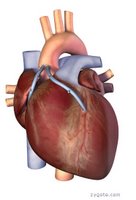 To sum up: the heart is amazing. There is no other muscle in the body like it, in that it is capable of contracting endlessly without tiring - it does so about 2.6 billion times before deciding to stop, and has the resilliency to pump about 85 bathtubs worth of blood through 60,000 miles of veins and arteries (Along with smaller, lesser things like capillaries) every day while it's at it. It has it's own electrical impulse system, which sends impulses to the different muscle components in such an order that, when everything goes according to plan, pumps blood through your body after rejuvenating it with an efficiency and grace that is simply astonishing.
The heart is basically a fueling station for all the little vehicles of air and fuel (henceforth known as "red blood cells") that travel around your body all day and keep you alive. They come to the heart through veins - vein basically means "to the heart" - through the Superior Vena Cava when the blood is coming from above the heart, and through the Inferior Vena Cava when it's from below. The blood passes into the Right Atrium, where it's sort of queued up waiting behind a valve (The Tricuspid Vavle, to be specific) before getting to rush into the Right Ventricle. From the Right Ventricle, something very exciting and unique happens, that is so strange and intrinsically amazing that I'm going to insert a paragraph break and tell you about if following.
< breathe >
Okay, so remember how vein basically means "towards the heart?" Well, arteries are exactly the opposite - they only pump blood away from the heart. Now, it would make sense that veins are ALWAYS bringing the tired and empty blood back to the heart for R&R, and that arteries are full of cheery little workers ready to help out the rest of your body. True? Not quite! You see, after blood has been sitting around in your Right Ventricle for a moment, it gets pumped - through an artery, because it's away from your heart - to your lungs to get filled up with oxygen and stuff. This artery, the Pulmonary Artery, is the only location in your entire body in which dead-tired blood gets pumped away from the heart!
So the blood gets oxygen, and then the reverse happens, as happy, livened blood comes back through the Pulmonary Vein to the Left Atrium (detecting a trend?). It sits there, all raring to go, then gets to pass through the Mitral Valve into the Right Ventricle (I really hope you're noticing that there's a pattern here) before shooting out through your body. It should be noted here that the Left Ventricle is a tough stud because it has to power the blood going to the rest of your body. From that Ventricle, it's a simple shot through the Aortic Valve, into the Aortic artery, and it's back to circulating around the body and recharging the rest of you. Simple.
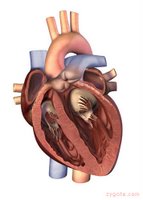 So how cool is that? The buh-bump sound you hear from your heart is various valves opening and closing in perfect harmony, getting the blood to you where you need it, when you need it (Much like Fedex, except better). In incredibly trained and gifted athletes, it can be large and strong and efficient enough that it only has to pump 30 times per minute while resting (Average for adults is around 75), but on demand it can speed things up to over 200BPM in some individuals to send your blood hurtling around your system so quickly that a red blood cell can get all the way around your body in only 20 seconds! It does this all automatically, with no thought from us. Really, our lives would be pretty boring if we did have to think about it all the time, because there's so much to it.
The ancient Egyptians believed that the heart was the key and vital organ in a person's body, and was responsible for containing the soul and intelligence of the person. While we now know that the brain is alot responsible for that, maybe they were on the right track. For now, just have a heart.
 To sum up: the heart is amazing. There is no other muscle in the body like it, in that it is capable of contracting endlessly without tiring - it does so about 2.6 billion times before deciding to stop, and has the resilliency to pump about 85 bathtubs worth of blood through 60,000 miles of veins and arteries (Along with smaller, lesser things like capillaries) every day while it's at it. It has it's own electrical impulse system, which sends impulses to the different muscle components in such an order that, when everything goes according to plan, pumps blood through your body after rejuvenating it with an efficiency and grace that is simply astonishing.
The heart is basically a fueling station for all the little vehicles of air and fuel (henceforth known as "red blood cells") that travel around your body all day and keep you alive. They come to the heart through veins - vein basically means "to the heart" - through the Superior Vena Cava when the blood is coming from above the heart, and through the Inferior Vena Cava when it's from below. The blood passes into the Right Atrium, where it's sort of queued up waiting behind a valve (The Tricuspid Vavle, to be specific) before getting to rush into the Right Ventricle. From the Right Ventricle, something very exciting and unique happens, that is so strange and intrinsically amazing that I'm going to insert a paragraph break and tell you about if following.
< breathe >
Okay, so remember how vein basically means "towards the heart?" Well, arteries are exactly the opposite - they only pump blood away from the heart. Now, it would make sense that veins are ALWAYS bringing the tired and empty blood back to the heart for R&R, and that arteries are full of cheery little workers ready to help out the rest of your body. True? Not quite! You see, after blood has been sitting around in your Right Ventricle for a moment, it gets pumped - through an artery, because it's away from your heart - to your lungs to get filled up with oxygen and stuff. This artery, the Pulmonary Artery, is the only location in your entire body in which dead-tired blood gets pumped away from the heart!
So the blood gets oxygen, and then the reverse happens, as happy, livened blood comes back through the Pulmonary Vein to the Left Atrium (detecting a trend?). It sits there, all raring to go, then gets to pass through the Mitral Valve into the Right Ventricle (I really hope you're noticing that there's a pattern here) before shooting out through your body. It should be noted here that the Left Ventricle is a tough stud because it has to power the blood going to the rest of your body. From that Ventricle, it's a simple shot through the Aortic Valve, into the Aortic artery, and it's back to circulating around the body and recharging the rest of you. Simple.
 So how cool is that? The buh-bump sound you hear from your heart is various valves opening and closing in perfect harmony, getting the blood to you where you need it, when you need it (Much like Fedex, except better). In incredibly trained and gifted athletes, it can be large and strong and efficient enough that it only has to pump 30 times per minute while resting (Average for adults is around 75), but on demand it can speed things up to over 200BPM in some individuals to send your blood hurtling around your system so quickly that a red blood cell can get all the way around your body in only 20 seconds! It does this all automatically, with no thought from us. Really, our lives would be pretty boring if we did have to think about it all the time, because there's so much to it.
The ancient Egyptians believed that the heart was the key and vital organ in a person's body, and was responsible for containing the soul and intelligence of the person. While we now know that the brain is alot responsible for that, maybe they were on the right track. For now, just have a heart.
Thursday, January 12, 2006
The Pen and the Sword, or: Death and Taxes
I enoy writing. I feel like it's a medium through which I can communicate and be understood, or at least understand myself. I'm starting to find a voice, and as I go through my day I hear this voice in snippets that beg to be put on paper (Whether digital- or cellulose-based). I don't expect that I'm especially good at it, but it at least puts in a singular stream some of my thoughts that would otherwise flow as a confused and multitudinous river. Music stirs me emotionally and intellectually, though I can't pen a note or a chord and expect any greatness of it; writing, on the other hand, is something tangible to me that I can share with others as they choose to partake.
I'm not sure what to make of myself. Sometimes I feel as though the birds are chirping and the sun is shining and all is right in the world, but there are other times that I feel miserable and downcast and wish that I was more. There are too many things for me to improve upon for me to even count or comprehend - I could be smarter, I could be better spoken, I could brush my teeth with more vigor and vim - and sometimes, when confronted with all of it, I'd rather just shut down and ask "why me." I could no sooner cease to be, though, than could any matter or energy, or for that matter any intelligence whatsoever. It seems then that the only path I can choose is to continue and progress in my chosen course.
Some people seem to choose a sort of apathetic doomsday approach to life. For them, the rain is always falling and the IRS is always on their tail to steal their money. It is better to passively complain than to seek any change, or it is better to be silent than to seek good. So many choose to walk with their eyes at their feet, looking only to where they're going and not toward what's around. But really, what's the fun in that? There's so much around to see if we just pull our heads up and decide to see it! People get trapped in filling their expensive Mercedes with expensive fuel on the way to their expensive job, and they seem to forget that they have souls. They forget to yearn and hope and chase and desire and love the good and great things in life - they forget to wonder at how magnificent everything really is and decide to peer at everything through nuclear-waste colored glasses.
I should hardly be speaking, though. So often I forget that the grim and the bleak is transitory, that though death and taxes may be certain they are hardly the be-all end-all of our existence, and there is so much happiness to be attained through other means. The simple things can often be so fulfilling; pedalling away on my (overpriced, underused) bicycle through glade and glen as I search for new places in my mind and on the road leaves me feeling elated about myself and others in a way that I rarely otherwise experience. I think everyone has a sort of special place to go, in which they can experience the flow - the quiet, content, and intent focus - that makes things meaningful and special where before they were simply the mundane. I know people that love to rock climb. There are others that like to paint, or sing, or dance, or run, or any number of other things that make them, for that brief moment in time, free.
It seems, as I think about it, that we desire entirely to be free but sometimes don't know how to accomplish it. War is wonderful and swords are stupendous, but the things that really make us happy and that drive us internally are our own personal arts. I find an artistic beauty in the whirring of my wheels and chain as I drive myself along, being an engine and deciding my speed and my path as my faculties combine to propel me down the black tarmac. Similarly, those with greater fine motor control than your average whale probably find great joy in taking what is in their mind and filling a canvas with it. Art can come in so many different forms, and it seems that we need it to live and survive.
I don't know what direction my life is going to take, but I'm very much excited to find out and get there. Anticipation can be a wonderful and evil thing, and it's with great joy (and sometimes greater duress) that I look toward that bright and glorious future (by which I'm NOT referring to socialism). Hopefully I'll remember to continue as I ought, and though my feet may be on the road less traveled by, I can keep my chin up and be alert, and that will make all the difference.
I'm not sure what to make of myself. Sometimes I feel as though the birds are chirping and the sun is shining and all is right in the world, but there are other times that I feel miserable and downcast and wish that I was more. There are too many things for me to improve upon for me to even count or comprehend - I could be smarter, I could be better spoken, I could brush my teeth with more vigor and vim - and sometimes, when confronted with all of it, I'd rather just shut down and ask "why me." I could no sooner cease to be, though, than could any matter or energy, or for that matter any intelligence whatsoever. It seems then that the only path I can choose is to continue and progress in my chosen course.
Some people seem to choose a sort of apathetic doomsday approach to life. For them, the rain is always falling and the IRS is always on their tail to steal their money. It is better to passively complain than to seek any change, or it is better to be silent than to seek good. So many choose to walk with their eyes at their feet, looking only to where they're going and not toward what's around. But really, what's the fun in that? There's so much around to see if we just pull our heads up and decide to see it! People get trapped in filling their expensive Mercedes with expensive fuel on the way to their expensive job, and they seem to forget that they have souls. They forget to yearn and hope and chase and desire and love the good and great things in life - they forget to wonder at how magnificent everything really is and decide to peer at everything through nuclear-waste colored glasses.
I should hardly be speaking, though. So often I forget that the grim and the bleak is transitory, that though death and taxes may be certain they are hardly the be-all end-all of our existence, and there is so much happiness to be attained through other means. The simple things can often be so fulfilling; pedalling away on my (overpriced, underused) bicycle through glade and glen as I search for new places in my mind and on the road leaves me feeling elated about myself and others in a way that I rarely otherwise experience. I think everyone has a sort of special place to go, in which they can experience the flow - the quiet, content, and intent focus - that makes things meaningful and special where before they were simply the mundane. I know people that love to rock climb. There are others that like to paint, or sing, or dance, or run, or any number of other things that make them, for that brief moment in time, free.
It seems, as I think about it, that we desire entirely to be free but sometimes don't know how to accomplish it. War is wonderful and swords are stupendous, but the things that really make us happy and that drive us internally are our own personal arts. I find an artistic beauty in the whirring of my wheels and chain as I drive myself along, being an engine and deciding my speed and my path as my faculties combine to propel me down the black tarmac. Similarly, those with greater fine motor control than your average whale probably find great joy in taking what is in their mind and filling a canvas with it. Art can come in so many different forms, and it seems that we need it to live and survive.
I don't know what direction my life is going to take, but I'm very much excited to find out and get there. Anticipation can be a wonderful and evil thing, and it's with great joy (and sometimes greater duress) that I look toward that bright and glorious future (by which I'm NOT referring to socialism). Hopefully I'll remember to continue as I ought, and though my feet may be on the road less traveled by, I can keep my chin up and be alert, and that will make all the difference.
Subscribe to:
Posts (Atom)